
.png)
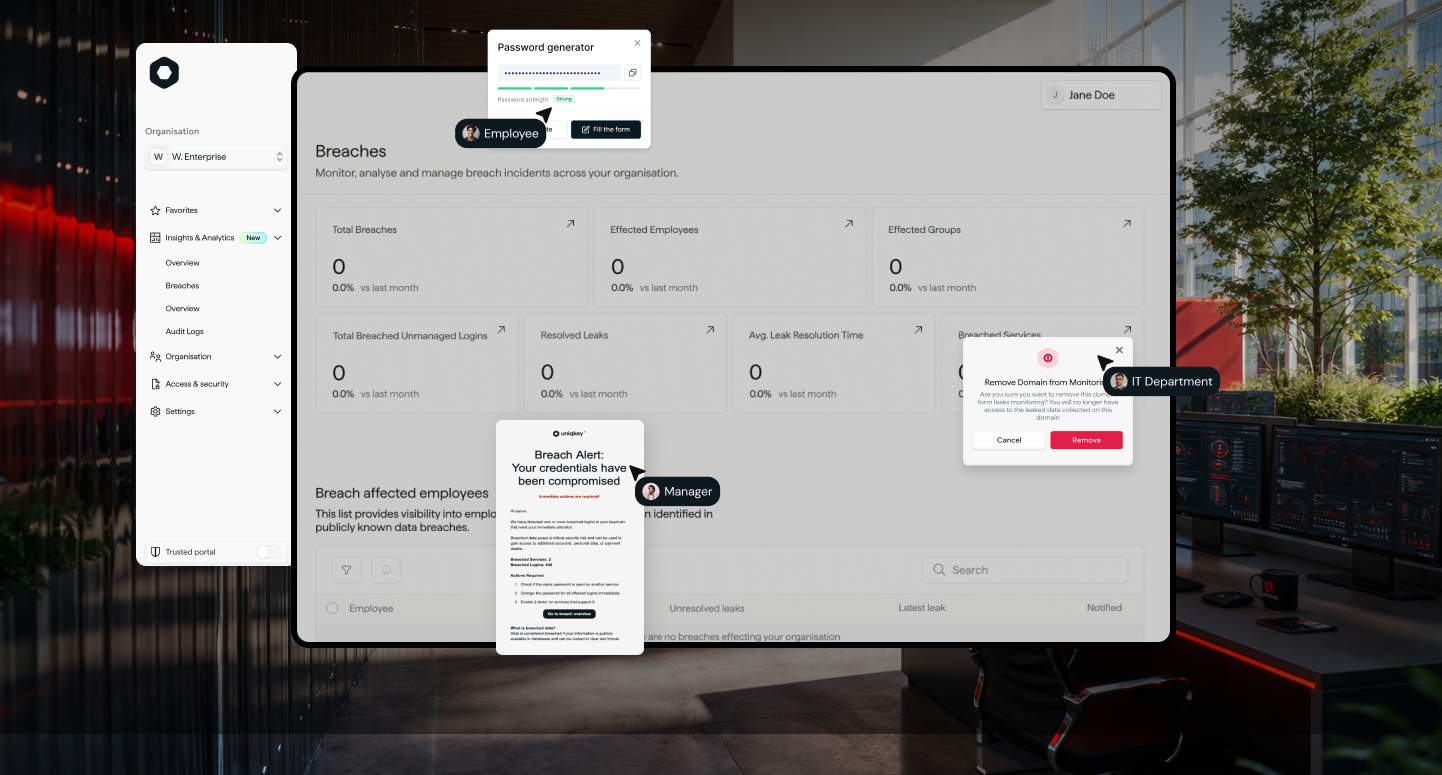
Making organisation effortless.
Clear structure, better control.
Most teams start with good intentions. Then the SaaS stack grows, shared credentials multiply, and ownership becomes unclear. Tags introduce a simple structure you can apply across the entire organisation, without changing how employees work.
Simplify secure data organisation
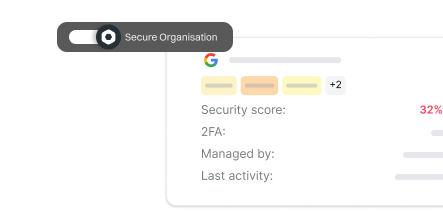
Create a consistent classification for logins that matches how your teams operate, by department, tool category, project, supplier, or risk.
Strengthen governance.
Control naming conventions and structure from one place, aligned to internal policies and operational needs.
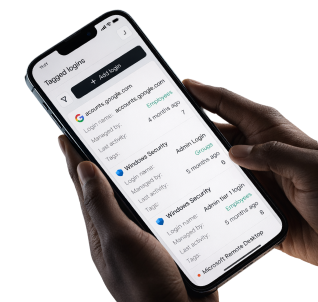
Improve oversight at scale.
When every login follows the same structure, ownership and control become clearer across teams and services
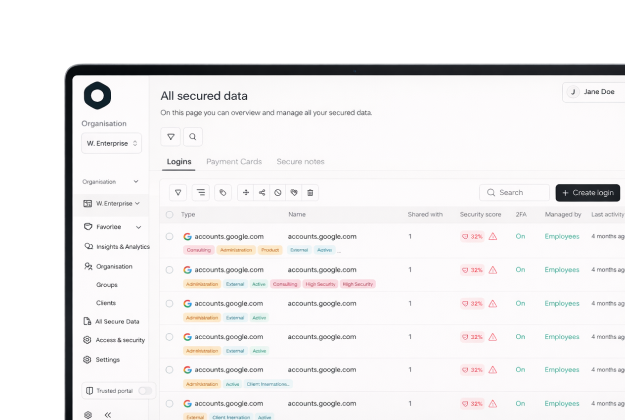
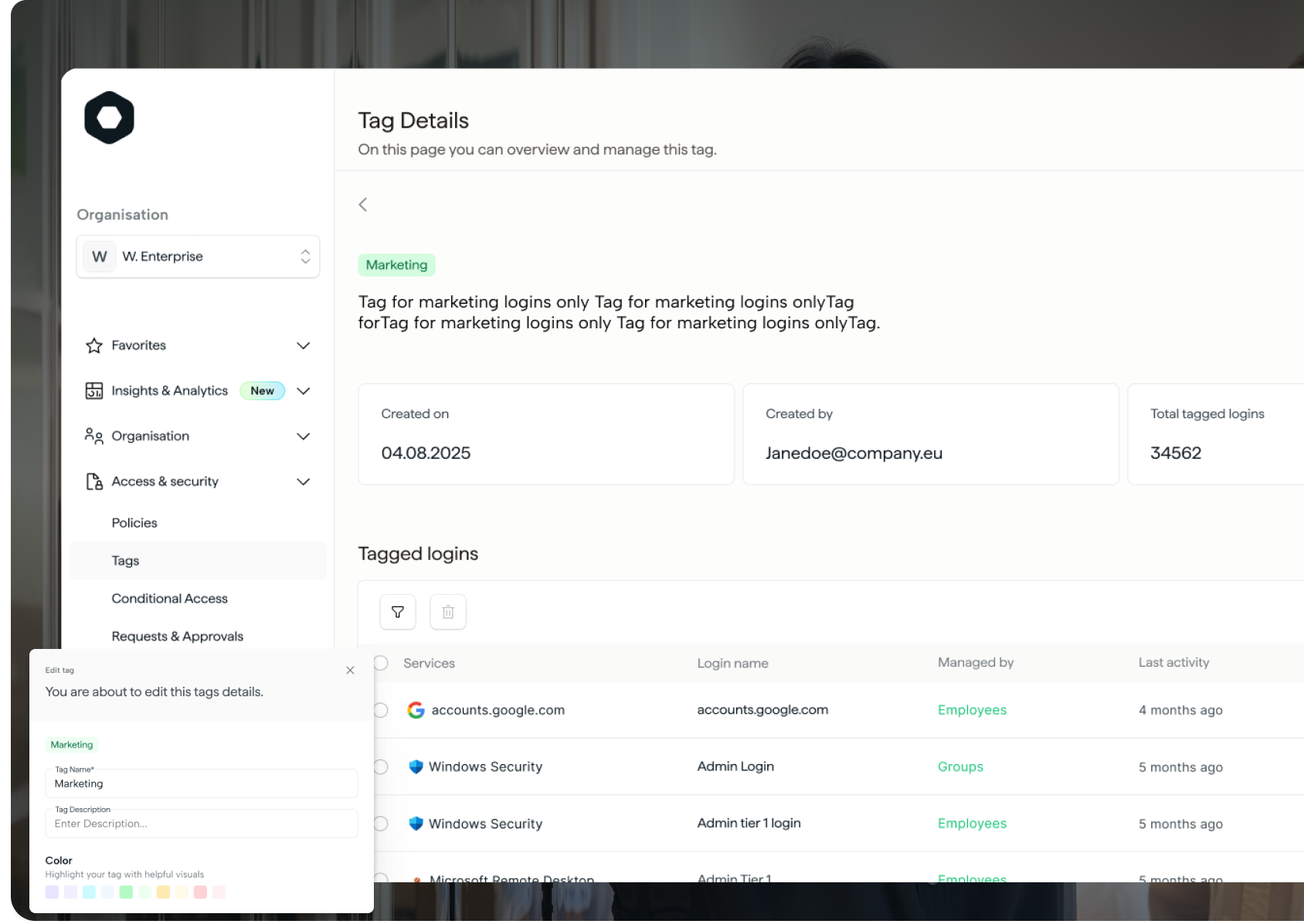
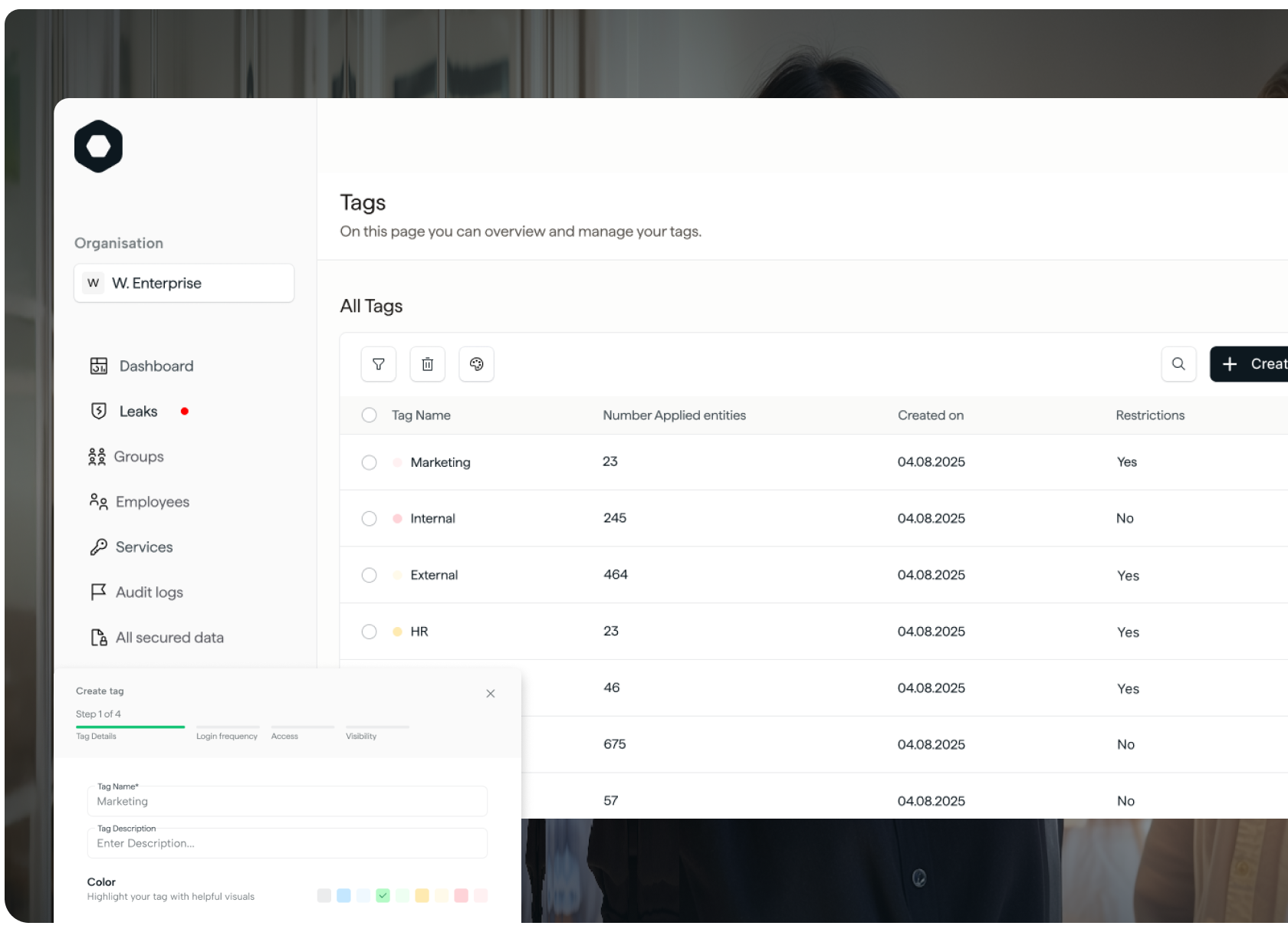
Tag management made simple for admins
See how Tag Management supports governance today and prepares your organisation for deeper visibility and smarter control tomorrow.
.png)
Trusted by leading European organisations.
Loved by customers, hated by hackers.
.svg)


.avif)


_HighPerformer_HighPerformer.svg)






Still have questions?
No problem.
Tag Management is an admin feature that helps you classify and organise logins across your organisation. You can group credentials by team, service, project, supplier, or risk category, all from the Admin Portal.
It is designed for IT and security teams in organisations that need better structure, governance, and oversight as their SaaS stack grows. It is particularly useful once shared credentials and ownership start to become unclear.
Tags create a consistent structure across services and teams, making it easier to understand who owns what, where credentials belong, and how to manage access at scale. That structure supports stronger governance without changing how employees work.
A good starting point is to mirror how your organisation operates. Common approaches include:
Department or team (Finance, HR, IT)
Tool category (CRM, Payroll, DevOps)
Project or initiative (Migration 2026, Supplier onboarding)
Supplier or partner (External agency, Outsourced IT)
Risk category (Privileged, Shared, High impact)
Yes, in most governance models you will want a login to appear under more than one classification, for example “Finance” and “Payroll” or “Privileged” and “Supplier”.
Tags turn your login data into something you can actually analyse. By applying a consistent classification across teams and tools, admins can filter the login list by tag and quickly understand patterns at scale. Filters support both include and exclude logic so you can focus on exactly the logins you want to investigate.
When every login follows the same structure, ownership becomes clearer across teams and services. This helps IT maintain order as tools, employees, and access requirements change.
Tagging lays the foundation for deeper visibility and smarter control over time. Once your structure is in place, it becomes easier to scale governance, improve oversight, and prepare for more advanced access management workflows.
